The Adventures of Amina al-Sirafi - Shannon Chakraborty
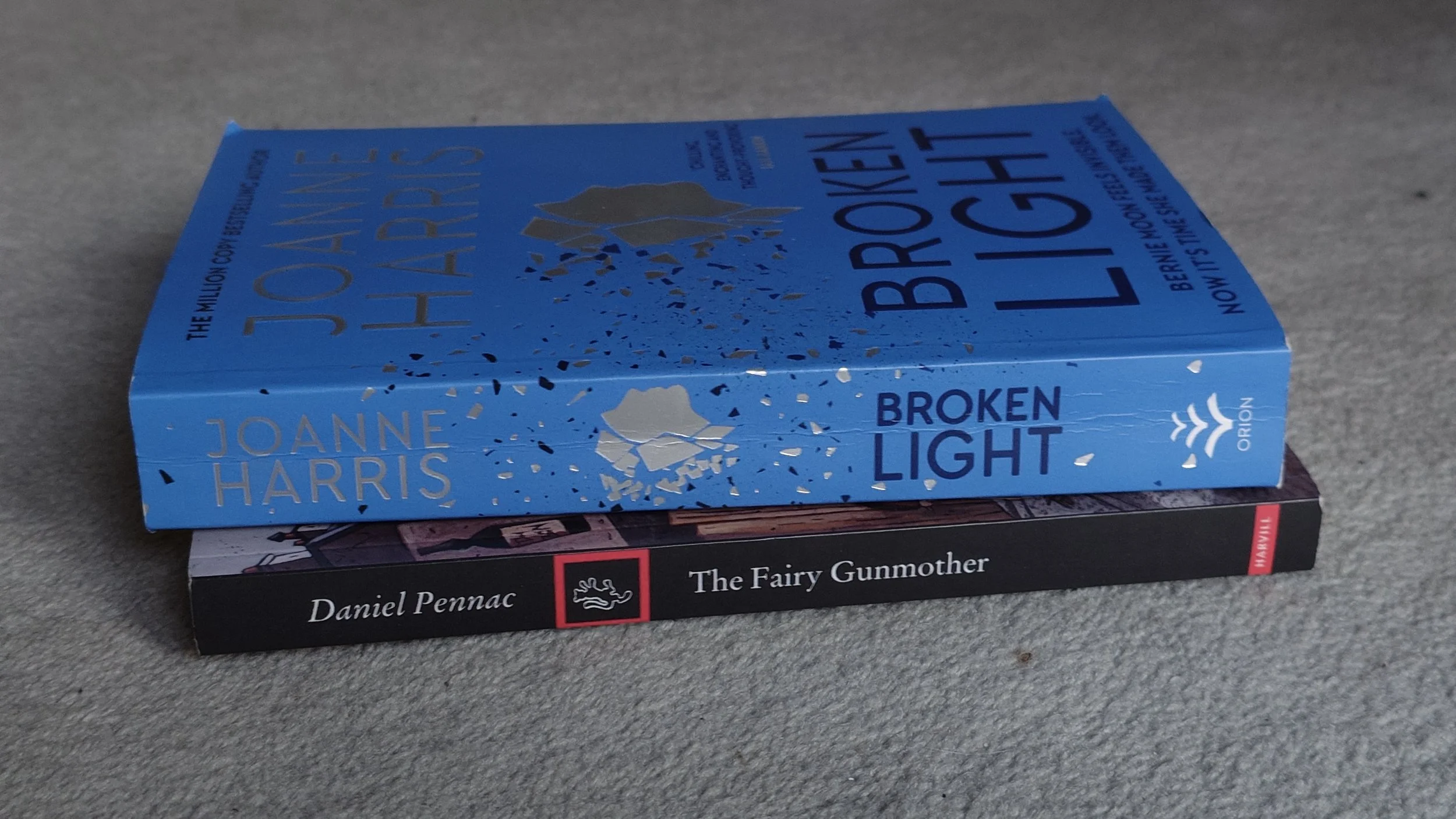
This has an incredibly pretty cover, and it’s a bit of a mystery why it’s been lurking unread on my shelf for a year. It was a gift from an excellent book-recommender friend (you may remember him from Broken Light, back in June).
““...Such treasures supposedly included the kind of artifacts Falco liked, so I set up a meet.”
”And how did that go?”
”Spectacularly wrong.””
Sometimes you start a book, and within pages have a strong sense of “right, I’m in…”. This novel is excellent, and from the start I was pretty sure I was going to love it.
Amina al-Sirafi is, by the way, a retired pirate. Definitely retired, and 100% not about to go on another pirating adventure. Not even a little bit.
Except, you know how it is, stuff happens, one thing leads to another, and by chapter 6 we are on board the Marawati, having organised a jailbreak, killed a few people, set fire to some ships, and lied to some officials.
Honestly, this book cracks along like nobody’s business. The story is intriguing, the dialogue is smart, and the characters are great fun (if not necessarily always people you’d want to end up in a bar with).
All the action is set around the Indian Ocean, in a medieval world which feels meticulously researched. Even the magic is aligned (in so far as I understand it) to the traditions and beliefs from the era. It’s not a usual backdrop for a fantasy novel (or at least, not in my experience) and it was delightful to be dropped into an unfamiliar culture in a very accessible way.
Overall, absolutely top. And another friend spied what I was reading, and helpfully informed me that there is now a sequel. If you want a grand yarn with a good old dollop of swash, buckle, djinn, dry humour and demons, this is it. (Although if your kids want a grand yarn with swash, buckle, etc, be warned that it’s quite gory in places and has some mildly surprising sex scenes.)
Buried in Cornwall - Janie Bolitho
The end of August saw me once again at my parents’ house. My dad doesn’t actually live in a lair which is equal parts workshop, potting shed and cosy whodunnit hoard, but if you think of him like that it will probably work for narrative purposes. I scored Buried in Cornwall off one of his bookpiles (it wasn’t the ‘in’ pile, and I don’t think it was the ‘out’ pile - it might have been the ‘donated-for-the-church-bookshop’ pile, or one of the many piles headed towards friends with whom he has mutual library-sharing pacts).
““There’s no need for sarcasm, Rose. Most people prefer to distance themselves from crime of any sort.”
”But I’m not most people, am I, Jack, or you wouldn’t be here now.””
I grew up reading golden age whodunnits, and have found relatively few modern writers who measure up. Although I didn’t know the name Janie Bolitho, I recognised the name of her “detective” character, Rose Trevelyan, from the back cover. Rose, I was vaguely aware, is the point-of-view character but she’s not actually Police, she’s more of interested bystander. Which is a good thing, in my view, because it means you can dispense with all the tiresome police procedural nonsense.
Sadly, this book was absolute guff. Buried in Cornwall is part of a series, and so the first chapter or two needs to catch you up with the cast of characters and the backplot. Which it does in a headlong rush of run-on sentences that were so ludicrous they actually sounded like parody.
After I settled in, I stopped noticing this (or possibly it calmed down a bit). The story trundled along with people taking weirdly obsessive interest in uninteresting details (for plot-necessitated reasons) and an awful lot of information about what people were eating and drinking.
The plot was, to be honest, a bit silly. And one of those uninteresting details turned out to be unrelated to the murder, but was instead someone with slightly shaky mental health doing something utterly bizarre for somewhat sketchy reasons. Oh, and the fact that one of the other characters had a slight psychotic break and threatened to kill Rose was just glossed over and they were all friends again by the end.
Disappointing, do not recommend.